

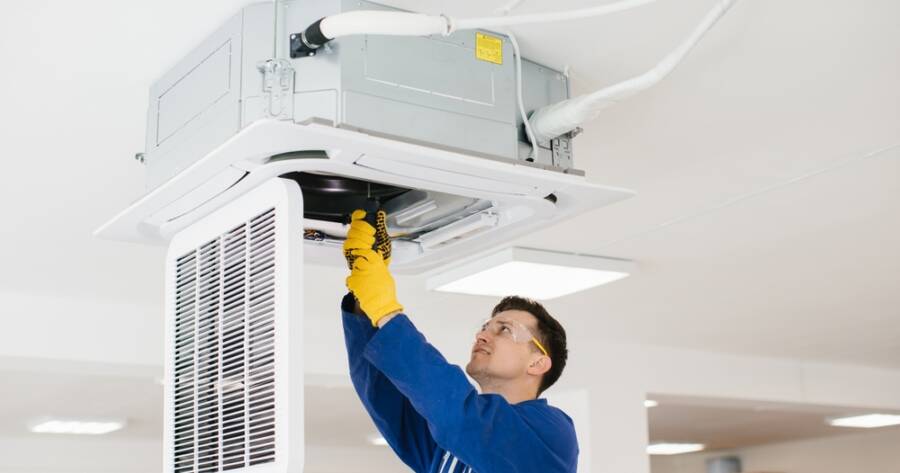
A commercial HVAC system affects far more than indoor temperature. Equipment selection, building conditions, controls, installation quality, and maintenance can all influence energy use, comfort, and long-term operating expenses. Planning around the building’s actual needs can help property owners avoid oversized equipment, unnecessary energy consumption, and costly performance problems after installation.
Start With the Building, Not Just the HVAC Equipment
Before selecting new equipment, evaluate the building itself. Insulation, windows, air leakage, lighting, occupancy, and internal heat from equipment can all affect heating and cooling demand. Improving the building envelope alongside an HVAC upgrade may reduce the capacity needed from the new system and lower both initial and ongoing costs (source).
Energy modeling can also help with larger projects. Engineers can compare different HVAC configurations, efficiency levels, controls, and building improvements before equipment is purchased. That allows decisions to be based on expected building performance rather than simply replacing an older system with equipment of similar capacity (source).
Size the HVAC System for the Actual Load
Bigger isn’t automatically better when choosing commercial HVAC equipment. Proper sizing starts with calculating the building’s heating and cooling loads based on factors such as occupancy, orientation, windows, lighting, equipment, ventilation, and local climate.
Right-sizing can help control equipment and operating costs while supporting indoor comfort. Oversizing may increase unnecessary capital costs and can create efficiency or performance problems, while insufficient capacity may struggle under peak conditions. DOE guidance for commercial rooftop units recommends matching equipment capacity to actual building requirements rather than relying solely on the size of the system being replaced (source).
Choose Efficient Equipment and Controls
Efficiency ratings deserve attention when comparing commercial HVAC systems. Depending on the equipment, measures such as IEER can help indicate how efficiently a unit performs at different operating loads. ENERGY STAR maintains efficiency criteria for qualifying light commercial HVAC equipment, which can provide one reference point when comparing models (source).
Controls are important too. Programmable schedules, appropriate temperature setpoints, variable-speed operation, demand-controlled ventilation, and building automation can help equipment respond more closely to how a property is actually used. DOE guidance recommends up-to-date controls that allow operators to set schedules, monitor conditions, and identify performance problems (source).
Businesses planning ahead should also be aware that updated federal efficiency requirements for certain air-cooled commercial package air conditioners and heat pumps with capacities of at least 65,000 Btu/h will apply to equipment manufactured or imported beginning January 1, 2029 (source).
Compare Long-Term Costs, Not Just Installation Price
The lowest installation quote doesn’t necessarily represent the least expensive system over its useful life. A more useful comparison looks at equipment price, installation costs, expected energy use, maintenance requirements, repairs, controls, and anticipated service life. DOE recommends considering both upfront and operating costs when evaluating HVAC upgrades and developing long-term capital plans (source).
Businesses can ask contractors to explain estimated annual energy use and maintenance requirements for competing systems. For example, a higher-efficiency unit may cost more initially but use less energy, while a less expensive option might carry higher operating costs. Expected occupancy changes and future building expansions should also be considered so owners aren’t forced into another major upgrade sooner than anticipated.
Plan the Installation Around Business Operations
Commercial HVAC projects can involve ductwork, electrical connections, controls, rooftop equipment, ventilation systems, and multiple trades. Coordinating those pieces before construction begins can reduce disruptions and help identify problems before they lead to delays.
Installation timing also matters in occupied buildings. Some businesses may need work performed in phases, after normal operating hours, or during periods of lower occupancy. Contractors should establish how heating, cooling, and ventilation will be maintained during the project and whether temporary equipment will be needed. Clear responsibilities, schedules, equipment specifications, and testing requirements should be documented before installation begins.
Commission the System Before Considering the Job Finished
Installing equipment doesn’t automatically mean it’s operating as designed. Commissioning checks whether HVAC components and controls have been installed correctly and are performing according to the project’s requirements. Testing may uncover problems involving controls, schedules, airflow, ventilation, sensors, or faulty equipment.
Performance should continue to be reviewed after the building is occupied. Building automation and monitoring systems can help facility managers spot unusual energy use, incorrect schedules, temperature problems, and equipment faults. DOE also notes that commissioning can be repeated when comfort or energy performance no longer meets expectations (source).
Building a Better Commercial HVAC Strategy
A successful commercial HVAC installation starts well before equipment arrives on-site. Evaluating the building envelope, calculating actual loads, comparing efficient equipment, planning installation carefully, and commissioning the finished system can all contribute to better performance.
Cost decisions should also extend beyond the initial quote. Considering energy use, maintenance, controls, equipment life, and future building needs gives property owners a more complete picture of what a system may cost to operate. Thoughtful planning at the installation stage can help businesses create an HVAC system that’s better suited to the building for years to come.