

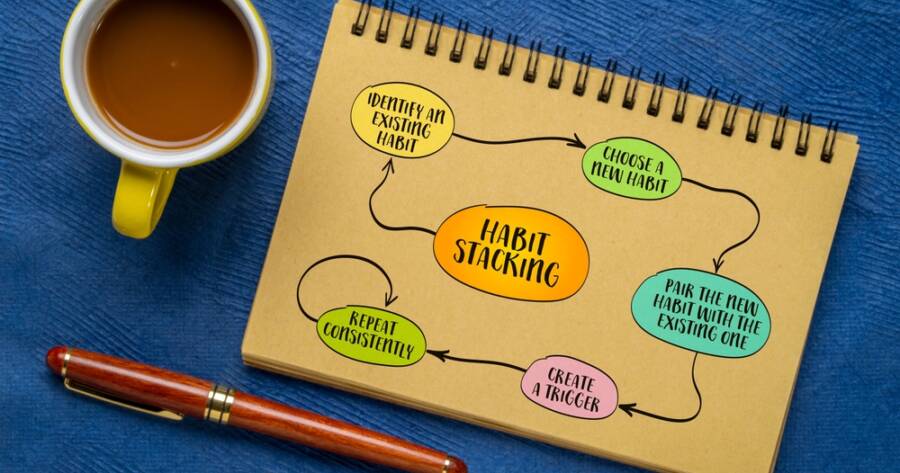
Building new habits is often harder than it sounds. Many people start with good intentions, only to forget, lose interest, or feel overwhelmed. Habit stacking offers a practical way to make change easier by connecting new actions to routines you already follow. Instead of relying on willpower, the approach uses consistency that already exists in your day. When done correctly, habit stacking can help new behaviors feel natural rather than forced.
What Habit Stacking Really Means
Habit stacking is the practice of attaching a new habit to something you already do every day. The idea is simple: instead of creating a brand-new routine, you build on an existing one. For example, if you already brush your teeth every morning, you can add a short stretch right after. The old habit acts as a reminder and trigger for the new one.
This works because established routines are stable. You do them without thinking. By linking a new habit to that routine, you reduce the chance of forgetting or skipping it. Over time, the two actions begin to feel like one combined behavior.
Why Existing Routines Make Habits Easier
New habits often fail because they require extra effort to remember. Habit stacking removes that problem. You are not trying to remember something new at a random time. Instead, the habit fits into a moment that already exists.
Another benefit is lower resistance. Starting small and attaching habits to familiar actions feels manageable. You are not changing your entire day. You are adjusting a small part of it. This makes habit stacking useful for people who feel overwhelmed by big lifestyle changes.
Existing routines also create clear timing. You know exactly when the new habit should happen. There is no guessing or flexible scheduling that can lead to delay.
How to Choose the Right Habit to Stack
Not every habit works well for stacking. The best new habits are small, quick, and clear. A habit that takes two minutes is much easier to attach than one that takes thirty.
Start by listing routines you already do every day. These might include waking up, making coffee, eating lunch, commuting, or getting ready for bed. Then choose a new habit that fits naturally after one of those actions.
For example:
- After pouring morning coffee, read one page of a book
- After sitting down at your desk, write a short task list
- After dinner, take a five-minute walk
The key is making the habit feel logical in that moment. If it feels awkward or forced, it may not stick.
Creating a Clear Habit Stack Formula
A simple way to structure habit stacking is to use a clear sentence format:
After I [existing habit], I will [new habit].
This removes confusion and makes the habit specific. Vague plans often fail because they leave room for excuses. Clear plans remove that flexibility.
For example:
- After I lock the front door, I will take three deep breaths
- After I sit on the couch in the evening, I will stretch for two minutes
Writing this down can help reinforce the connection. Seeing the plan makes it easier to follow, especially in the early days.
Common Mistakes That Break Habit Stacks
One common mistake is stacking too many habits at once. When people see success, they often try to add more habits quickly. This can make the routine feel heavy and lead to burnout. One habit per stack is usually enough.
Another issue is choosing unstable routines. If the existing habit does not happen every day, the stack will break. For example, stacking a habit onto a weekend-only routine will limit consistency.
Finally, some people choose habits that are too demanding. If the new habit feels like work, it will be skipped. Keep it simple. You can always expand later once the habit feels automatic.
How to Adjust and Maintain Habit Stacks Over Time
Habit stacks are not permanent. Life changes, schedules shift, and routines evolve. It is important to review your stacks from time to time.
If a habit is no longer working, adjust it. You might change the timing, reduce the effort, or attach it to a different routine. This is not failure. It is refinement.
Once a habit feels automatic, you can decide whether to keep it as is or build onto it. Strong habits can support additional ones, but only when they feel effortless.
Making Habits Feel Automatic
Habit stacking works because it respects how people actually live. Instead of forcing change through motivation, it builds on what already exists.
By choosing stable routines, keeping habits small, and creating clear connections, new behaviors can become part of daily life with less effort. Over time, these small additions add up, creating lasting change that feels natural rather than stressful.