

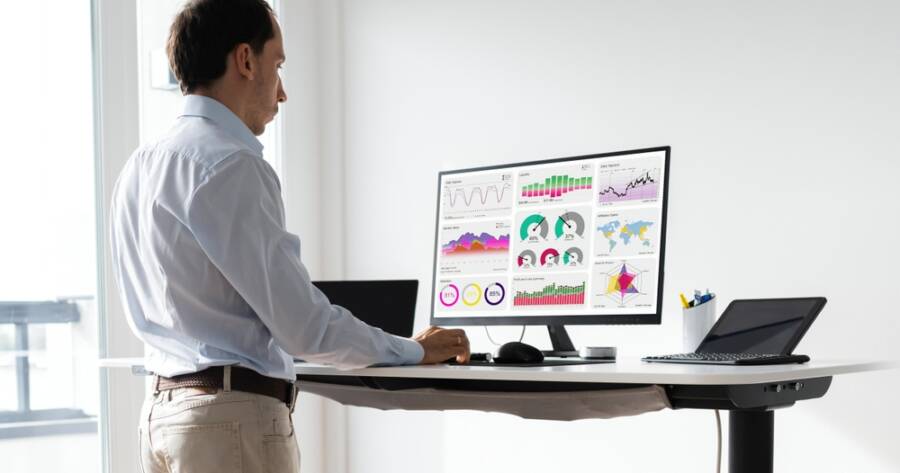
Standing desks have become common in homes and workplaces. Many people use them hoping to move more, feel less stiff, and break long sitting habits. While standing desks do change how people work, their real impact depends on how they are used. Simply standing instead of sitting does not automatically increase movement. To understand whether standing desks actually improve daily movement levels, it helps to look at what they change, what they don’t, and how behavior plays a role.
What Standing Desks Are Designed to Do
Standing desks are designed to reduce long periods of sitting by giving users the option to work while standing. Some desks remain at a fixed height, while others allow switching between sitting and standing. Their main purpose is flexibility, not exercise. Standing uses different muscles than sitting and requires more balance, which can make the body feel more engaged during the workday.
However, standing desks are not meant to turn desk work into physical activity. They do not create movement on their own. Instead, they change posture and allow easier position changes. Understanding this difference helps set realistic expectations about what standing desks can and cannot do.
Standing Still Is Not the Same as Moving More
One of the most common misunderstandings is assuming that standing automatically increases movement. Standing still for long periods can be just as uncomfortable as sitting too long. While standing does increase muscle use slightly, it does not provide the same benefits as walking, stretching, or changing positions often.
Daily movement includes small actions like shifting weight, stepping away from the desk, turning, and reaching. If someone stands in one position for hours, overall movement may stay low. Standing desks offer the option to move more, but they do not force movement. The difference comes from how the desk is used, not from standing alone.
How Standing Desks Can Support More Movement
When used intentionally, standing desks can make movement easier during the workday. Standing lowers the effort needed to step away from the desk, stretch, or walk briefly. People are more likely to move during phone calls, adjust posture, or change positions when they are already upright.
Standing also increases body awareness. Many users notice discomfort sooner while standing, which prompts them to shift, stretch, or take short breaks. Over time, these small movements can reduce stiffness and help break long periods of stillness. The desk itself does not create movement, but it removes barriers that often keep people seated for too long.
Why Standing Desks Alone Rarely Change Habits
Standing desks are often treated as a full solution to low activity, but they work best as part of a larger routine. Without reminders or habits that encourage movement, standing can become just another fixed position. Some people end up standing for too long, leading to sore feet or tight legs, which can reduce comfort and focus.
To truly affect daily movement levels, standing desks need to be paired with regular breaks, posture changes, and short walks. Without these behaviors, the impact stays limited. The desk provides opportunity, but behavior determines results.
Using Standing Desks to Build Better Movement Patterns
The most effective use of a standing desk involves switching positions throughout the day. Alternating between sitting and standing helps avoid strain and keeps the body more active. Many people find it helpful to change positions every hour or so rather than staying in one posture for long stretches.
Light movement while standing also matters. Shifting weight, changing foot position, or doing brief stretches keeps muscles engaged without interrupting work. Standing desks make these small actions easier to notice and perform, especially for people who struggle to move while seated.
The goal is not to stand all day, but to avoid staying still for too long in any one position.
Who Is Most Likely to Benefit From Standing Desks
Standing desks tend to benefit people who spend many hours at a desk and feel stiff or restless from sitting. They are especially useful for those who want more control over posture and movement during the day. People who already move often or whose work involves physical activity may see less change.
Comfort, desk setup, and personal habits all influence results. Standing desks work best for people who treat them as tools that support movement rather than solutions that replace it.
Standing Desks Enable Movement, They Don’t Create It
Standing desks can affect daily movement levels, but only when they are used with intention. They reduce long sitting periods and make small movements easier, but they do not replace walking, stretching, or regular breaks. When paired with position changes and movement habits, standing desks can support a more active workday. The real benefit comes from how the desk is used, not from standing alone.